Index
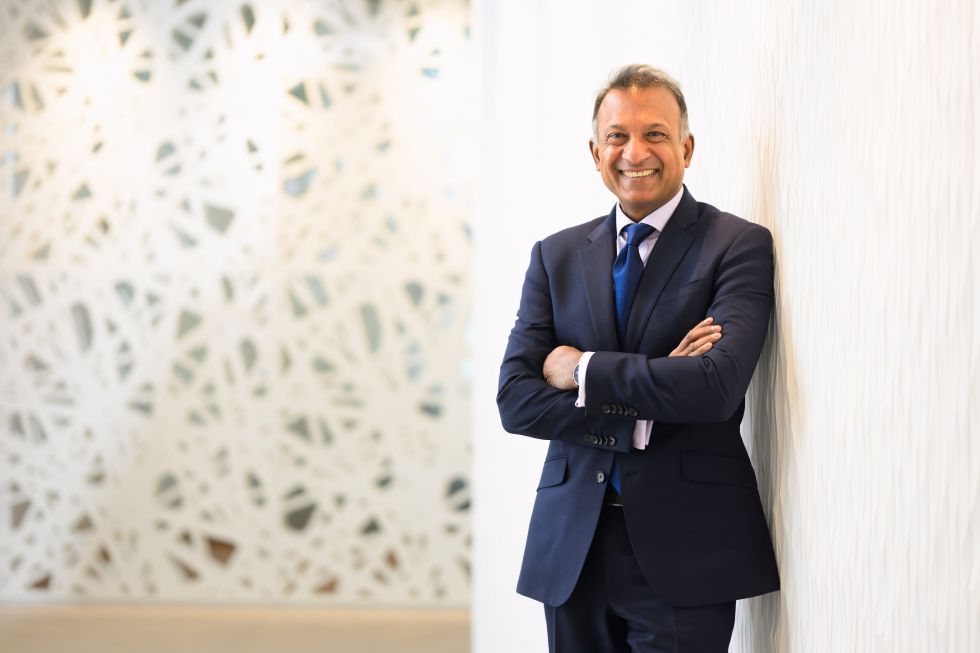
About Bobby Gaspar, M.D., Ph.D.
From “science fiction medicine” to a pioneering treatment for rare diseases
The game-changing approach of hematopoietic stem cell gene therapy
Transforming challenges into success through renewed focus and purpose
A shared vision for the future to bring gene therapy to more patients worldwide
The genes we inherit build our bodies. When rare anomalies occur, they can cause serious developmental or immune disorders that deeply affect patients and their families.
Technologies known as gene therapies have been developed to supply the body with functioning copies of genes to treat or prevent certain genetic diseases. Founded in 2015 and a Kyowa Kirin company since 2024, Orchard Therapeutics is a leader in hematopoietic stem cell (HSC) gene therapy, a revolutionary method that can potentially transform severe, often fatal inherited genetic diseases with a single treatment.
We spoke with Bobby Gaspar, M.D., Ph.D., Orchard Therapeutics CEO and a pioneer in gene therapy, to learn more about the journey of bringing this life-changing treatment to patients around the world.
About Bobby Gaspar, M.D., Ph.D.
Bobby is a world-renowned scientist and physician with more than 25 years of experience in medicine and biotechnology. He is one of the principal scientific founders and the current chief executive officer of Orchard Therapeutics, a global gene therapy leader acquired by Kyowa Kirin in 2024. A pioneer in gene therapy, Bobby was named to the TIME100 Health list in 2024. He is also an honorary professor of pediatrics and immunology at the University College London (UCL) Great Ormond Street Institute of Child Health.
From “science fiction medicine” to a pioneering treatment for rare diseases
―How did you come to develop this therapy and establish Orchard Therapeutics?
I'm a pediatric physician by training, and was working at one of the world’s leading children’s hospitals in London. I was looking after a child with a severe genetic disease, and asked the professors how the child would be treated. They said, “She's going to have gene therapy,” and I genuinely thought that was a trick they play on the most junior member of the team. At the time, it sounded like science fiction medicine. But it was real: She was going to be the first individual in the UK to have any form of gene therapy. I thought it was amazing.
I volunteered to oversee the child's care. Since this was the first-ever treatment, we had to put together protocols, make ethics submissions, and work out ways of doing things, which I found fascinating. Knowing that there was a form of medicine that could have this kind of impact—I was hooked. So I went into the lab and did a Ph.D., and built up a gene therapy program at the hospital. I was meant to do six months, but ended up staying 25 years.
As a faculty member at University College London, I worked on developing and progressing gene therapy. Together with another physician scientist, we built up one of the largest programs worldwide. We showed for the first time that gene therapy can correct genetic diseases. The first patient we treated successfully was in 2001. That boy—now a man—has a functional immune system. He's finished his university studies. He posts on social media about his life. And that was due to a single administration of gene-modified cells. It was very powerful to see the impact this could have on him and his family.
Over the years, we had children coming from different parts of the world to access therapy in London. And for the vast majority, it was very successful. It was incredibly rewarding and satisfying to clinically treat patients and see the effect that it had on them and their families. It became clear that we needed to expand this from the academic setting into an entity that could make these academic endeavors into standard medicines and provide access for patients worldwide. We had interest from venture capitalists to set up our own company, which would give us a lot of say in how that happened. And that's the path that we chose to take.
The game-changing approach of hematopoietic stem cell gene therapy
―What exactly is HSC gene therapy?
HSC gene therapy is a form of genetic medicine where we remove blood stem cells, called hematopoietic stem cells, from an individual and modify them by introducing working copies of a faulty or missing gene. This is done using viral vectors to modify the hematopoietic stem cells. These genetically modified cells are transplanted back into the patient, where they migrate, multiply, and proliferate throughout the body.
―What makes this therapy so innovative?
One of the most important is the fact that you can get a potentially durable therapeutic effect with a single administration. Unlike other forms of genetic medicine, in HSC gene therapy, the viral vectors integrate the new genetic material into the chromosome of the cells. As each cell divides, the corrected genetic material is passed on. With every cell division, you create another cell that is also gene modified as well. If you modify HSCs in the laboratory and then introduce them back into the patient, you have this expanding pool of gene-modified cells that remains for the lifetime of the patient, resulting in a potentially durable effect.
The other really innovative aspect is that HSCs can naturally become all the other different parts of the blood system. They become white cells, immune cells, or red blood cells. They can become platelets. Or they can become what are called monocyte-macrophage lineage cells, which can migrate into other tissues, creating the opportunity to address many different diseases. For example, they can migrate into the brain, allowing you to deliver new genes into the brain. That's how we've been able to correct a neurodegenerative condition. We have patients who were treated nearly 15 years ago, and they continue to show normal development—something extraordinary in this disease. That's how powerful the HSC approach is.
Transforming challenges into success through renewed focus and purpose
―Has Orchard encountered any major difficulties in its journey?
When building the company, at one stage we were reliant on the financial markets. Things had happened in the gene therapy field that made the markets very bearish, so we couldn't raise money like before. It became clear that we could no longer resource everything we wanted to do. We had to let go of a number of programs, and people as well. That was a really tough time.
We had around 250 staff, but could only support around 150 or 160, meaning we had to let around a third of our workforce go. But the fact was, either we do this, or we won't survive as a company and won't move forward at all. We have to be united on what we're going to do, even though it's tough. And we have to communicate that to the organization. That was a seminal moment for us as a company.
―How did the company overcome this to survive?
We narrowed our goals and focused our purpose, which was extremely galvanizing. Then I asked my leadership team, “It’s going to be tough, but do you want to be part of this?” And they all said, “Yes, we want to be part of this. Let's make this happen.”
I strongly believe that it’s the people that in our company that are most important. Once people commit, they put their all in. We had to be very streamlined; in some areas we couldn’t have teams of five—we just couldn’t afford it. Despite the challenges of working in a lean environment, our people showed incredible dedication to the program and rose to the challenge.
I think this saved the company, but only because we were very clear about what our purpose was, that we were all in it together, and that we were going to have to work extremely hard. We adopted what we called a STRIVE mindset: we were striving to thrive as a company. I think these tough decisions and commitments are also ultimately what led to our success. We were able to move forward and get approval for a medicine that was an extraordinary achievement for such a small company.
―How do you share that sense of purpose with those who aren’t directly involved in the therapy?
Many of our staff don’t have a scientific or medical background, but they need to know about what we do. The best way is to hear directly from the families, so our patient advocacy team invites patients and their families to talk about their experiences. I think initiatives like this bring our staff together with a shared sense of purpose, so everyone feels that that they are contributing to save patients’ lives.
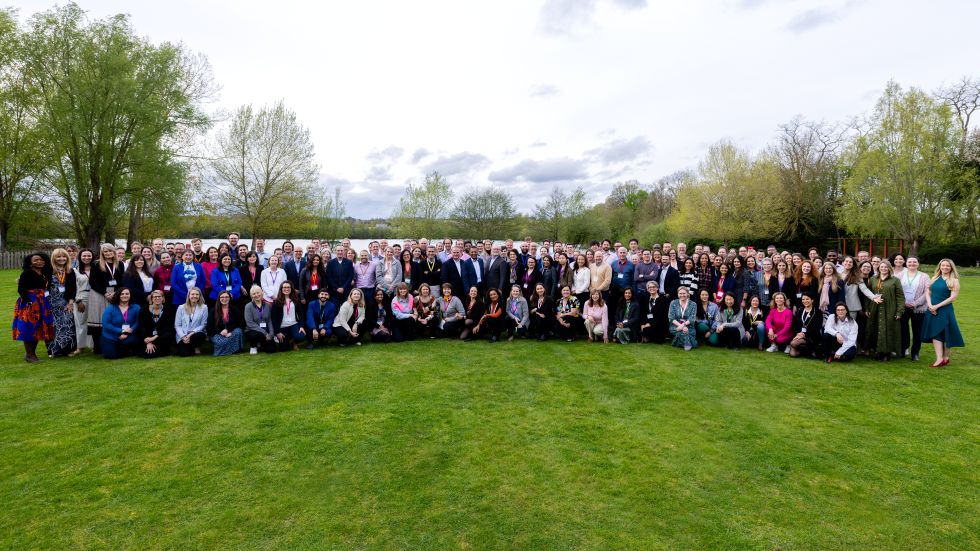
At our last company-wide event, we invited a family where it was unfortunately too late to treat one child, and she’s now confined to a wheelchair. But we were able to treat her younger sister, who's now able to run around. Both children came to the meeting, and the whole company could see firsthand what a difference gene therapy can make. I think it's very important to bring these stories to the team, and they give us incredibly positive feedback about how motivating it is.
A shared vision for the future to bring gene therapy to more patients worldwide
―Could you tell us about your partnership with Kyowa Kirin?
It's been incredibly rewarding being part of Kyowa Kirin, and a very productive relationship. We’re doing more than before, combining resources, and thinking about how we can combine research capabilities. I think the two companies are very similar in several ways.
First is our mindset: the STRIVE mindset aligns very well with the KABEGOE principles and associated behaviors. Everything we’ve been doing at Orchard has a KABEGOE element to it: ingenuity, doing the right thing, caring for patients, being brave, being agile, being bold. So, we want to formally adopt the KABEGOE principles as well.
Another similarity is that this type of therapy is very patient-centric, and Kyowa Kirin is a very patient-centric organization. Kyowa Kirin aims to create life-changing value, and I think we have a shared vision to build therapies for many different diseases—to treat rare diseases, but also more common diseases as well.
―What do you see as the future for Orchard Therapeutics and gene therapy?
We're in rare diseases at the moment, and I think we can have a dramatic effect on a number of them. Ultimately, our vision is for gene therapy to be seen as a mainstream medicine, which means standardizing it and making it more accessible. We haven't reached that stage yet, but have programs in the pipeline.
While HSC gene therapy isn’t approved yet in Japan, we're working with Kyowa Kirin to go through the regulatory process. Whether scientific or regulatory, we've come across many hurdles and will continue to do so. But when you know there’s something that provides such an extraordinary outcome for patients, you find a way to overcome challenges.
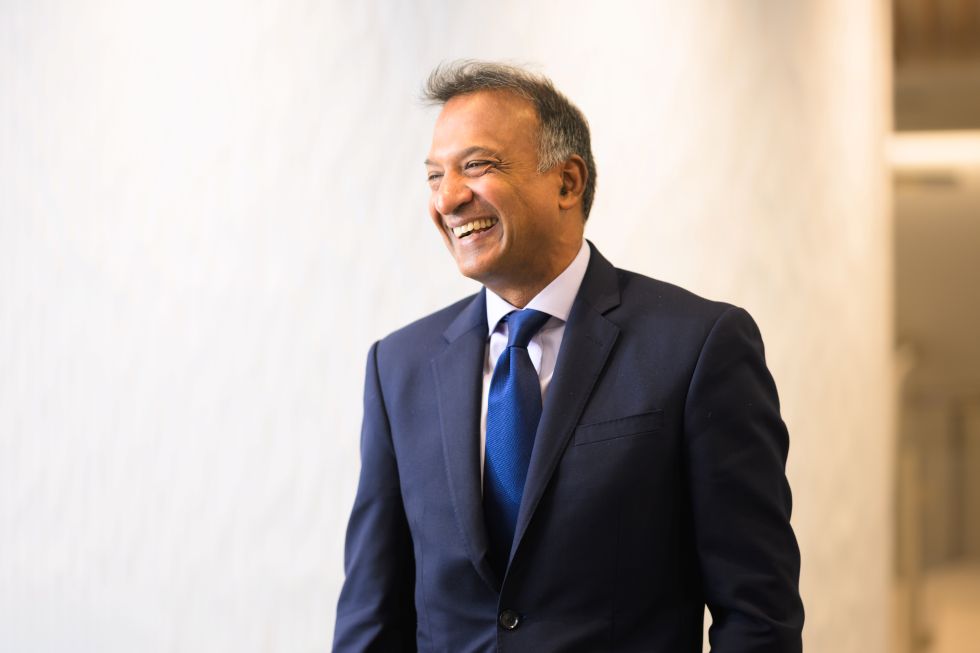
The future of HSC gene therapy.
After this interview, in December 2025 it was announced that two genetic diseases, including metachromatic leukodystrophy, have been added to the U.S. Recommended Uniform Screening Panel (RUSP), the federal list of medical conditions recommended for newborn screening (NBS). Currently, 14 states representing more than half of U.S. births have mandated RUSP alignment. NBS enables identification of listed diseases, which is critical to achieving the earliest possible treatment. Globally, community-led initiatives continue to drive progress, marking a highly anticipated step toward expanding access to care and support for patients and families. Orchard teams played a huge part in making this happen and demonstrated how having a shared purpose and real commitment can make a significant impact.
More Kyowa Kirin "Growth" Stories
Rare Disease Day 2025: Spreading Awareness and Support Holding Events Worldwide
Patients | August 29, 2025

Enhancing Patient-Centric Activities in Japan region’s Medical Affairs Department (MA Department): A Seminar with Guest Speakers, Including a Patient
Patients | August 19, 2025
Special Dialogue between the CEO & COO: Together, Pioneering New Horizons
Growth | July 24, 2025
“Healthcare Café” Report ─ A Platform for Patient Dialogue: Thinking About Hematopoietic Stem Cell Transplantation (Part One)
Patients | July 23, 2025
“Healthcare Café” Report ─ A Platform for Patient Dialogue: Thinking About Hematopoietic Stem Cell Transplantation (Part Two)
Patients | July 23, 2025
Special Discussion: Story for Vision 2030
Growth | June 23, 2025
PRIDE MONTH Message from Abdul Mullick, President and COO
People & Culture | June 2, 2025

Listening to Patients’ Voice and Responding to Their Needs: Kyowa Kirin's Patient Engagement Activities
Patients | March,18, 2025
Kyowa Kirin CPO Itagaki’s message for International Women’s Day
People & Culture | March 7, 2025
What is the Kyowa Kirin Group’s health and productivity management initiative, Wellness Action 2025?
People & Culture | February 10, 2025
Rare Disease Day 2025 - More Than You Can Imagine
Patients | February,7, 2025

Kyowa Kirin CEO Miyamoto’s New Year Message: Accelerate Our Reforms with Determination for Delivering Life-changing Value to Patients
Growth | January 14, 2025
Kyowa Kirin Hosted Booth at Tokyo Rainbow Pride 2024 for a Second Year in a Row: Initiatives for Accelerating DE&I and the Ideal State a Company Should Strive to Be (Part One)
People & Culture | October 15, 2024

Kyowa Kirin Hosted Booth at Tokyo Rainbow Pride 2024 for a Second Year in a Row: Initiatives for Accelerating DE&I and the Ideal State a Company Should Strive to Be (Part Two)
People & Culture | October 15, 2024
Strengthening our training framework to tackle the biopharmaceutical engineer shortage
People & Culture | September 20, 2024
Highlighting Kyowa Kirin's initiatives across regions for PRIDE MONTH 2024
People & Culture | September 13, 2024

Bio Adventure: Kyowa Kirin’s works with local communities on project to foster future scientists
People & Culture | August 9, 2024
PRIDE MONTH Message from Jeremy Morgan, President, Kyowa Kirin International plc (EMEA region)
People & Culture | July 5, 2024
Kyowa Kirin launches the CTCL Global Care Collaborative’s Time to Act global consensus statement
Patients | May 13, 2024
Kyowa Kirin Global Corporate Planning Head Shoko Itagaki’s Message for International Women's Day
People & Culture | March 8, 2024

Kyowa Kirin CEO Miyamoto’s New Year Message
Growth | January 9, 2024
Kyowa Kirin Chief International Business Officer Abdul Mullick’s Message on UN’s International Day of Persons with Disabilities
Sustainability | December 1, 2023
Kyowa Kirin hosted a booth for the first time at the Tokyo Rainbow Pride 2023 [Our Diversity, Equity & Inclusion]
People & Culture | November 9, 2023
Our Stable Supply of High-quality Pharmaceuticals
Sustainability | September 20, 2023

Provide pharmaceuticals for unmet medical needs - A Conversation with Kyowa Kirin’s R&D Executives
Innovation | August 22, 2023
Ensure a Thriving Global Environment for Future Generations
Sustainability | July 28, 2023

“Menstruation” and “fertility treatment” felt like taboo subjects in the workplace - Why be open about issues unique to women? PartⅡ
People & Culture | June 9, 2023
“Menstruation” and “fertility treatment” felt like taboo subjects in the workplace - Why be open about issues unique to women? PartⅠ
People & Culture | April 25, 2023
Kyowa Kirin CEO Miyamoto’s Message on Rare Disease Day
Patients | February 28, 2023
Promoting patient advocacy and nurturing patient-centric care: Interview with Kyowa Kirin North America
Patients | February 14, 2023

Celebrating another year of diverse initiatives around the world: RDD 2022 in EMEA
Patients | January 24, 2023

Celebrating another year of diverse initiatives around the world: RDD 2022 in North America
Patients | December 15, 2022

Celebrating another year of diverse initiatives around the world: RDD 2022 in Asia Pacific
Patients | November 21, 2022

Celebrating another year of diverse initiatives around the world: RDD 2022 in Japan
Patients | October 20, 2022
Providing high-quality pharmaceuticals to patients around the world
Sustainability | September 22, 2022
Striving to create life-changing “Only-one value” that brings smiles to patients
Innovation | July 25, 2022
Kyowa Kirin International: It's Time to Shine A Light on XLH
Patients | June 27, 2022

Kyowa Kirin CEO Miyamoto’s Message on Pride Month
People & Culture | June 9, 2022
Kyowa Kirin International Celebrates the UN’s International Day of Persons with Disabilities in EMEA
People & Culture | January 20, 2022

Kyowa Kirin International: Around the world challenge
People & Culture | December 17, 2021

Kyowa Kirin North America: Honoring The Caregiver, Everyday Heroes, During National Family Caregivers Month
Patients | November 19, 2021

Kyowa Kirin's Effort to Realize a Sustainable Society
Sustainability | October 11, 2021

Our Financial Strategy for Creating Life-changing Value
Growth | September 9, 2021
Changes in society caused by COVID-19 and the impact on Kyowa Kirin
Growth | August 19, 2021
Bio Adventure Hands-On Experience Sessions: Become a drug discovery researcher During Your Summer Break
Sustainability | July 27, 2021
AMGEN AND KYOWA KIRIN TO JOINTLY DEVELOP AND COMMERCIALIZE KHK4083, A PHASE 3-READY, POTENTIAL FIRST-IN-CLASS TREATMENT FOR ATOPIC DERMATITIS
News Release | June 1, 2021
MEI Pharma and Kyowa Kirin Announce New Clinical Data on Zandelisib at American Society of Clinical Oncology Annual Meeting
News Release | May 20, 2021

White Paper on the unrecognized burden of XLH in adults in Europe
Patients | July 13, 2020

Empowering Children to Ask "Why?": Tohoku University Science Campus Hands-On Science Lessons (First Half)
People & Culture | March 5, 2020
Empowering Children to Ask "Why?": Tohoku University Science Campus Hands-On Science Lessons (Second Half)
People & Culture | March 5, 2020
“Delivering smiles with sports” Creating an inclusive society through table tennis
Sustainability | January 14, 2020
Bio Adventure*: Kyowa Kirin Invites Children to a Science Adventure
People & Culture | July 3, 2019