Index
Enhancing Governance Transparency and Management Speed to the Next Level
A Management Structure Designed for Global Operations Beyond Regional and Functional Silos
One Shared Commitment: Delivering Value to Patients Around the World
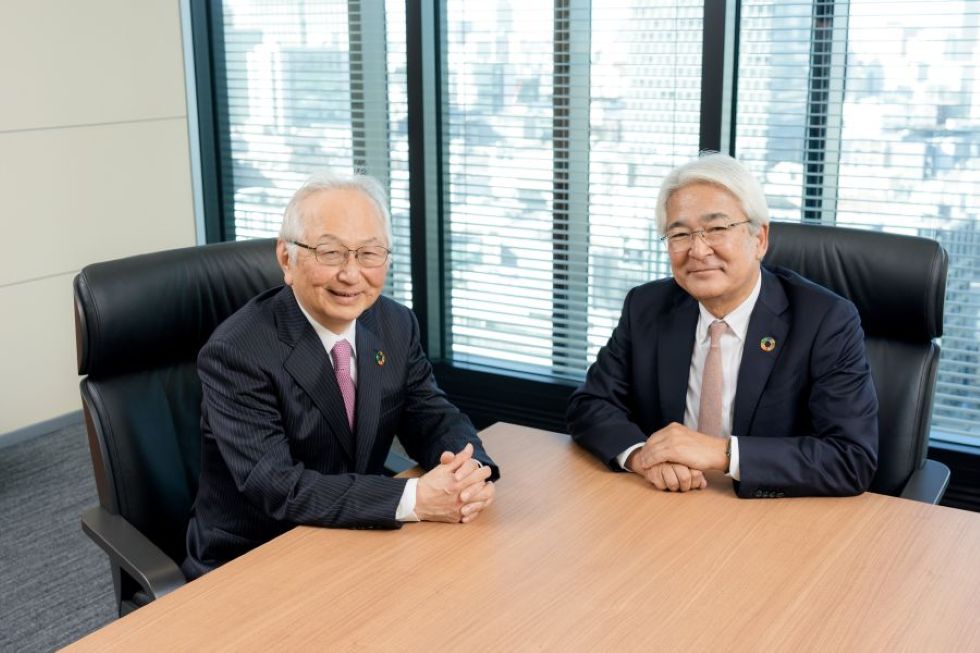
The Kyowa Kirin Group has taken significant steps from 2025 through 2026 to transform its management structure, including the transition to a company with an Audit and Supervisory Committee, the introduction of a CEO and COO structure, and the reorganization into a C-suite Executive framework under the leadership of new CEO Abdul Mullick.
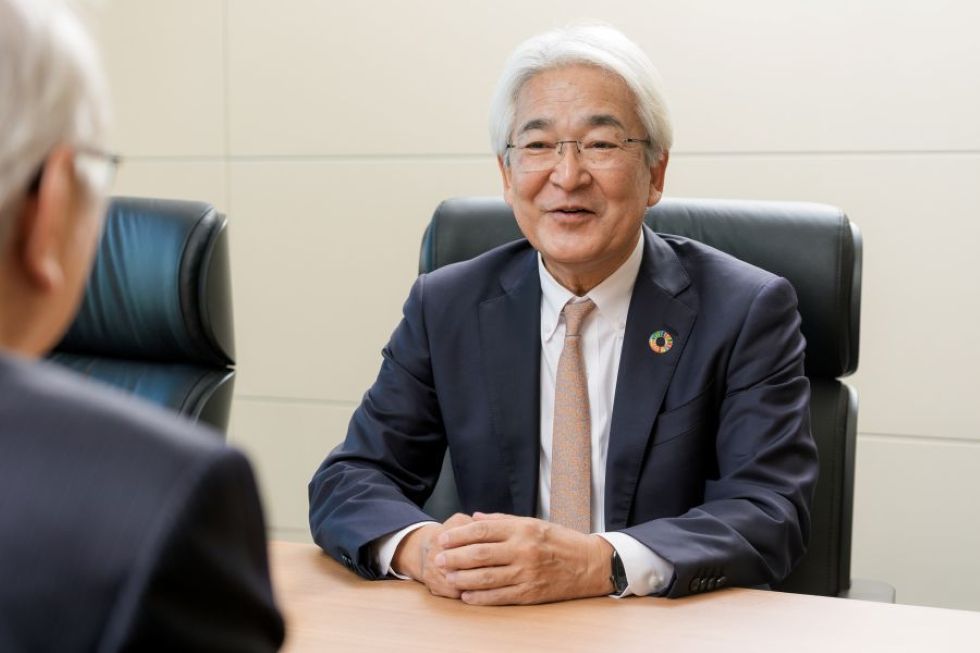
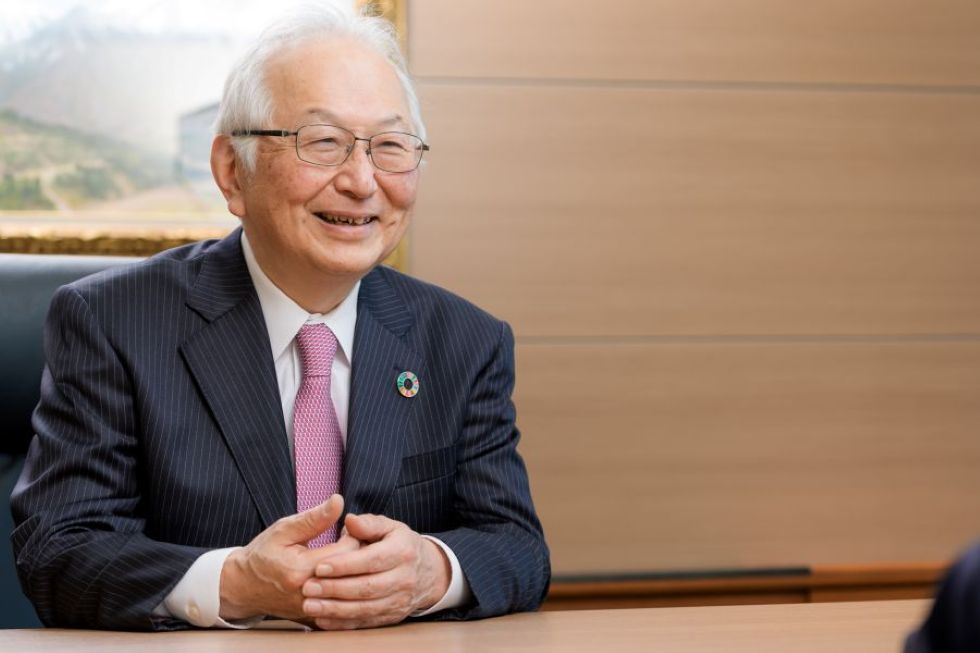
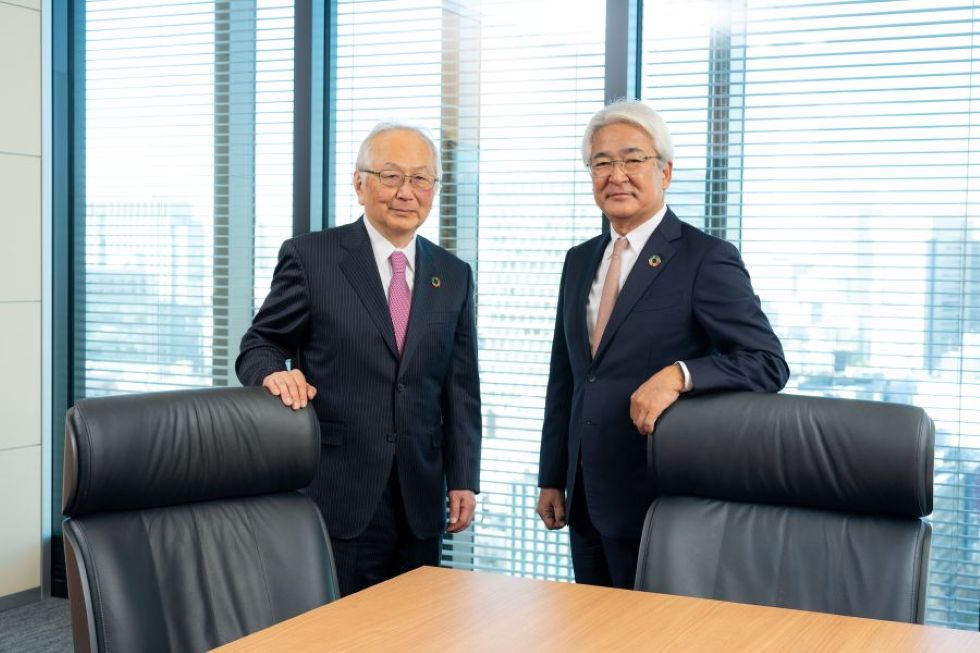
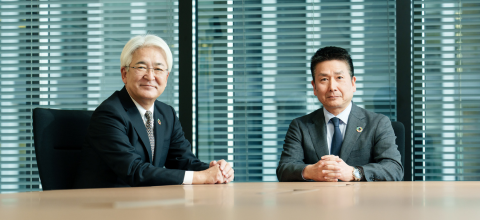
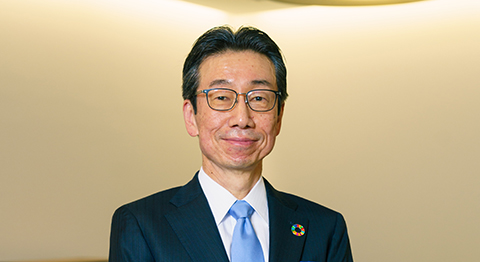
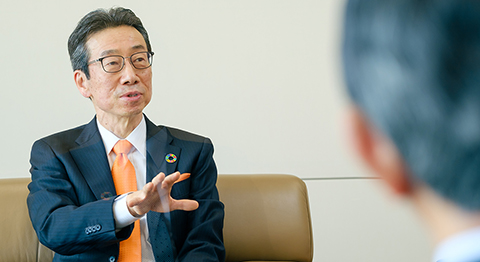
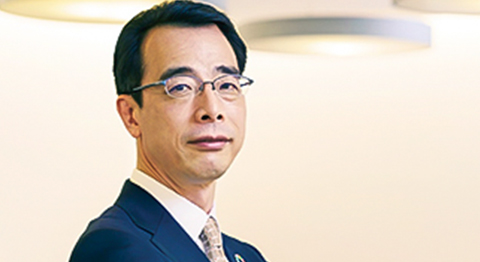
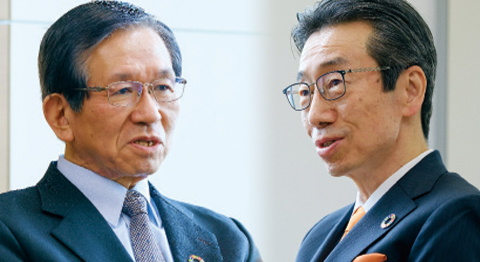
In light of these transformations, a discussion was held between Yoshihisa Suzuki, Chairman of the Board and an independent outside director, and Kohei Kan, who was newly appointed as Chairman of the Audit and Supervisory Committee in March 2026.
In this discussion, they exchanged candid views from their respective perspectives on the background and objectives of these reforms, the challenges and outlook for global expansion, as well as the roles expected of outside directors in enhancing corporate value.
Profiles
- Yoshihisa Suzuki, MBA
Independent Outside Director (Chairman of the Board) - Independent Outside Director since April 2022. Former President & COO, Vice Chairman, Member of the Board, ITOCHU Corporation
- Kohei Kan
Independent Outside Director (Member of the Audit and Supervisory Committee) - Independent Outside Director who is Audit and Supervisory Committee Member since March 2026. Board member of the International Federation of Accountants (IFAC) (Present).
Enhancing Governance Transparency and Management Speed to the Next Level
Suzuki To ensure the independence of its management, Kyowa Kirin has progressively shifted to a structure in which an independent outside director serves as Chairperson of the Board of Directors, while independent outside directors account for a majority of the Board. As part of these efforts, and with the aim of further strengthening its ability to bring Vision 2030 to fruition and execute Story for Vision 2030, the Company adopted a management structure featuring a CEO and COO in 2025.
In 2026, Abdul Mullick was officially appointed CEO at the same time Kyowa Kirin successfully transitioned from a company with an Audit & Supervisory Board to a company with an Audit and Supervisory Committee.
As far as the appointment of Mullick-san as the individual who will take the helm of future management is concerned, a considerable amount of time was spent on careful and thorough deliberations by the Nomination and Remuneration Advisory Committee. Aside from his extensive track record in the U.K., he has received high marks, both inside and outside the Company, for his skills and strength of character.
Having asked him to observe and participate in the overall management of the Company over his year as COO, we had the chance to assess his decision-making capabilities. As such, I soon became convinced that he was more than qualified to serve as CEO. The other members of the Board of Directors held the same opinion, and with unanimous consent, the Company officially appointed him as CEO.
Kan As seen from an outside perspective, I recognize that the decision to undertake this series of transitions made a great deal of sense. By becoming a company with an Audit and Supervisory Committee, Kyowa Kirin has now more clearly defined the division of roles between the supervisory and executive functions, and has improved the transparency of governance. By the same token, fully delegating authority to frontline executives enables the Board of Directors to focus entirely on fulfilling its oversight function.
At the same time, I place considerable importance on the fact that members of the Audit and Supervisory Committee are also members of the Board of Directors. I believe this allows the Board to engage in more effective supervision of important decision-making processes from an independent standpoint.
In my opinion, putting in place a robust executive structure helped fuel the success of this transition. The establishment of the highly flexible C-suite Executive framework was a major factor in making these changes possible.
Suzuki I could not agree more. As the executive structure has steadily come into its own over the past few years, much of the decision-making function has been delegated to those responsible for the executive function. Prior to the transition to the new C-suite Executive framework, all of the CxOs, with the exception of Mullick-san, were Japanese nationals. A major change brought about by this transition was the inclusion of new Region Presidents for North America and EMEA. Moreover, with the addition of the CEO of Orchard Therapeutics and a growing number of executives with international backgrounds, the C-suite Executive framework, in general, has taken on a truly global nature.
Kan I also feel another major component of the Company’s transition was the intention to further speed up the pace of management. In particular, I believe that delegating the decision-making function involving R&D to executives will enable the Board of Directors to leverage the diverse expertise and experience of each of its members to more deeply deliberate on overarching strategies and the management foundations that support them.
Suzuki You are absolutely right. R&D-related decision-making requires specialized expertise and detailed data, which is why the Board of Directors has historically spent a considerable amount of time deliberating on these matters. While the Board of Directors will continue to determine the total amount for annual R&D budgets, I hope that responsibility for the allocation of those budget amounts will be left to the management team going forward.
On the other hand, as Kan-san just pointed out, we must further ramp up the pace of decision-making compared with the past. In the true sense of the term, I believe the Board of Directors and the management team must work in unison to propel the Kyowa Kirin Group forward.
A Management Structure Designed for Global Operations Beyond Regional and Functional Silos
Kan One of the areas I place particular importance on when monitoring the executive function is regulatory compliance. As North America becomes the Company’s most important market, addressing regulatory risks, particularly those posed by the U.S. Food and Drug Administration (FDA), will have a more direct impact on business operations and management.
Suzuki In parallel with regulatory risks, supply chain risks are also exhibiting an upswing. A substantial portion of the Company’s manufacturing activity has to date taken place at Takasaki Plant in Japan. Going forward, however, a new biopharmaceutical manufacturing plant in Sanford, North Carolina, in the United States will serve as an additional manufacturing base.
This initiative will create a manufacturing structure that makes the most of Kyowa Kirin’s manufacturing sites in Takasaki and Sanford, along with contract development and manufacturing organizations (CDMOs), instantly propelling the globalization of our manufacturing operations forward. Navigating this development with skill is a new issue for management.
Kan After all, the more broadly the supply chain expands across the globe, the more complex it becomes to manage and the more risk it involves.
Suzuki Absolutely. Which is exactly why Toshiyuki Kurata was appointed Chief Supply Chain Officer (CSCO), and why Kyowa Kirin is strengthening preparations in a bid to address any contingencies while appropriately sharing data regarding global supply chain risks across all management levels.
Over and above the aforementioned, the Most Favored Nation (MFN) drug pricing policy in the U.S. may become a major risk issue in the future. On this point, too, I would like to see Steve Schaefer, who oversees the Group’s operations in North America, look beyond that region and carry out his executive duties with a broader perspective and an eye toward how to steer the Company as a whole globally.
Kan I could not agree more. Growing as a company in today’s uncompromising environment would be a challenge if the head of each region and division adopted an approach focused solely on their own domain. In fact, siloing is one of the greatest factors hindering global growth. In this sense, I strongly believe that the establishment of the C-suite Executive framework is an attempt to tear down the walls between regions and divisions and manage the Company globally in a unified manner that is consistent with current prevailing trends.
Suzuki I feel the same way. Vision 2030 and Beyond: Our Growth Story, which was announced in February 2026, will serve as a key roadmap for sharing Kyowa Kirin’s global growth vision across the Group as a whole. At the same time, I hope the Company will continue to value its KABEGOE corporate culture. In my estimation, this is because a culture that prevents siloing while encouraging open debate and mutual feedback is essential for working on a global scale.
One Shared Commitment: Delivering Value to Patients Around the World
Kan One core role of the Audit and Supervisory Committee, as I see it, is not to place a brake on management, but to help steer it in a way that encourages the Company to head in the right direction. As the Internal Audit Department and external audit firm engage in close collaboration, I intend to firmly monitor the ways in which the Company recognizes and addresses management risk.
Suzuki To that end, another important factor is the volume and quality of frontline information relayed to the Board of Directors. The role played by Kenji Shibata, an internal member of the Audit and Supervisory Committee, is therefore extremely important. Having previously served as Director of the Internal Audit Department, I expect him to take fully into account actual conditions on the ground and ensure that the voice of the frontlines is appropriately reflected in discussions at the Board level.
Serving as an outside director, I have had many opportunities to see how people across the Kyowa Kirin Group stand by patients throughout their journey. Guided by the concept of the patient journey, they look beyond diagnosis and treatment to the challenges patients face in their daily lives thereafter. They stay connected with patient communities, engage with family members, and seek to understand the difficulties patients encounter before taking action. I am always impressed by the way the Group puts into practice its mission as a specialty pharmaceutical company dedicated to supporting people living with rare diseases.
Kan The mission of the Kyowa Kirin Group itself holds significant social value. Looking back on the companies I have been involved in throughout my career, I believe it is extremely important that a clear sense of purpose, why we do what we do, is deeply shared across the organization. As a member of the Board, I very much look forward to supporting the Kyowa Kirin Group’s further growth across the globe and seeing the Company continue to create value for patients around the world.
Suzuki I feel exactly the same way. As members of the Board of Directors, we intend to firmly back the growth of the Company in conjunction with the executive team. At the same time, I will commit with all my ability to ensuring the Kyowa Kirin Group emerges as a company that can contribute to patients around the globe. To that end, we will continue working together to support the Company’s growth and help bring greater value to patients around the world.
More Kyowa Kirin "Growth" Stories
Rare Disease Day 2025: Spreading Awareness and Support Holding Events Worldwide
Patients | August 29, 2025

Enhancing Patient-Centric Activities in Japan region’s Medical Affairs Department (MA Department): A Seminar with Guest Speakers, Including a Patient
Patients | August 19, 2025
Special Dialogue between the CEO & COO: Together, Pioneering New Horizons
Growth | July 24, 2025
“Healthcare Café” Report ─ A Platform for Patient Dialogue: Thinking About Hematopoietic Stem Cell Transplantation (Part One)
Patients | July 23, 2025
“Healthcare Café” Report ─ A Platform for Patient Dialogue: Thinking About Hematopoietic Stem Cell Transplantation (Part Two)
Patients | July 23, 2025
Special Discussion: Story for Vision 2030
Growth | June 23, 2025
PRIDE MONTH Message from Abdul Mullick, President and COO
People & Culture | June 2, 2025

Listening to Patients’ Voice and Responding to Their Needs: Kyowa Kirin's Patient Engagement Activities
Patients | March,18, 2025
Kyowa Kirin CPO Itagaki’s message for International Women’s Day
People & Culture | March 7, 2025
What is the Kyowa Kirin Group’s health and productivity management initiative, Wellness Action 2025?
People & Culture | February 10, 2025
Rare Disease Day 2025 - More Than You Can Imagine
Patients | February,7, 2025

Kyowa Kirin CEO Miyamoto’s New Year Message: Accelerate Our Reforms with Determination for Delivering Life-changing Value to Patients
Growth | January 14, 2025
Kyowa Kirin Hosted Booth at Tokyo Rainbow Pride 2024 for a Second Year in a Row: Initiatives for Accelerating DE&I and the Ideal State a Company Should Strive to Be (Part One)
People & Culture | October 15, 2024
Kyowa Kirin Hosted Booth at Tokyo Rainbow Pride 2024 for a Second Year in a Row: Initiatives for Accelerating DE&I and the Ideal State a Company Should Strive to Be (Part Two)
People & Culture | October 15, 2024
Strengthening our training framework to tackle the biopharmaceutical engineer shortage
People & Culture | September 20, 2024
Highlighting Kyowa Kirin's initiatives across regions for PRIDE MONTH 2024
People & Culture | September 13, 2024

Bio Adventure: Kyowa Kirin’s works with local communities on project to foster future scientists
People & Culture | August 9, 2024
PRIDE MONTH Message from Jeremy Morgan, President, Kyowa Kirin International plc (EMEA region)
People & Culture | July 5, 2024
Kyowa Kirin launches the CTCL Global Care Collaborative’s Time to Act global consensus statement
Patients | May 13, 2024
Kyowa Kirin Global Corporate Planning Head Shoko Itagaki’s Message for International Women's Day
People & Culture | March 8, 2024

Kyowa Kirin CEO Miyamoto’s New Year Message
Growth | January 9, 2024
Kyowa Kirin Chief International Business Officer Abdul Mullick’s Message on UN’s International Day of Persons with Disabilities
Sustainability | December 1, 2023
Kyowa Kirin hosted a booth for the first time at the Tokyo Rainbow Pride 2023 [Our Diversity, Equity & Inclusion]
People & Culture | November 9, 2023
Our Stable Supply of High-quality Pharmaceuticals
Sustainability | September 20, 2023
Provide pharmaceuticals for unmet medical needs - A Conversation with Kyowa Kirin’s R&D Executives
Innovation | August 22, 2023
Ensure a Thriving Global Environment for Future Generations
Sustainability | July 28, 2023

“Menstruation” and “fertility treatment” felt like taboo subjects in the workplace - Why be open about issues unique to women? PartⅡ
People & Culture | June 9, 2023
“Menstruation” and “fertility treatment” felt like taboo subjects in the workplace - Why be open about issues unique to women? PartⅠ
People & Culture | April 25, 2023
Kyowa Kirin CEO Miyamoto’s Message on Rare Disease Day
Patients | February 28, 2023
Promoting patient advocacy and nurturing patient-centric care: Interview with Kyowa Kirin North America
Patients | February 14, 2023

Celebrating another year of diverse initiatives around the world: RDD 2022 in EMEA
Patients | January 24, 2023

Celebrating another year of diverse initiatives around the world: RDD 2022 in North America
Patients | December 15, 2022

Celebrating another year of diverse initiatives around the world: RDD 2022 in Asia Pacific
Patients | November 21, 2022

Celebrating another year of diverse initiatives around the world: RDD 2022 in Japan
Patients | October 20, 2022
Providing high-quality pharmaceuticals to patients around the world
Sustainability | September 22, 2022
Striving to create life-changing “Only-one value” that brings smiles to patients
Innovation | July 25, 2022
Kyowa Kirin International: It's Time to Shine A Light on XLH
Patients | June 27, 2022

Kyowa Kirin CEO Miyamoto’s Message on Pride Month
People & Culture | June 9, 2022
Kyowa Kirin International Celebrates the UN’s International Day of Persons with Disabilities in EMEA
People & Culture | January 20, 2022

Kyowa Kirin International: Around the world challenge
People & Culture | December 17, 2021

Kyowa Kirin North America: Honoring The Caregiver, Everyday Heroes, During National Family Caregivers Month
Patients | November 19, 2021
Kyowa Kirin's Effort to Realize a Sustainable Society
Sustainability | October 11, 2021

Our Financial Strategy for Creating Life-changing Value
Growth | September 9, 2021
Changes in society caused by COVID-19 and the impact on Kyowa Kirin
Growth | August 19, 2021
Bio Adventure Hands-On Experience Sessions: Become a drug discovery researcher During Your Summer Break
Sustainability | July 27, 2021
AMGEN AND KYOWA KIRIN TO JOINTLY DEVELOP AND COMMERCIALIZE KHK4083, A PHASE 3-READY, POTENTIAL FIRST-IN-CLASS TREATMENT FOR ATOPIC DERMATITIS
News Release | June 1, 2021

MEI Pharma and Kyowa Kirin Announce New Clinical Data on Zandelisib at American Society of Clinical Oncology Annual Meeting
News Release | May 20, 2021

White Paper on the unrecognized burden of XLH in adults in Europe
Patients | July 13, 2020

Empowering Children to Ask "Why?": Tohoku University Science Campus Hands-On Science Lessons (First Half)
People & Culture | March 5, 2020
Empowering Children to Ask "Why?": Tohoku University Science Campus Hands-On Science Lessons (Second Half)
People & Culture | March 5, 2020
“Delivering smiles with sports” Creating an inclusive society through table tennis
Sustainability | January 14, 2020
Bio Adventure*: Kyowa Kirin Invites Children to a Science Adventure
People & Culture | July 3, 2019