Index
Flexible collaboration between disease teams and technology teams
Creating new technologies from unconventional ideas
An environment where research themes emerge through a bottom-up approach
At Kyowa Kirin, we are strengthening our research capabilities as part of our commitment to delivering on the Story for Vision 2030. In 2025, we integrated and reorganized our research laboratories in Japan. Under this structure, early-stage exploratory research is advanced at the Innovation Center, while promising research is transferred to the Bio-Pharmaceutical Center and accelerated toward clinical development.
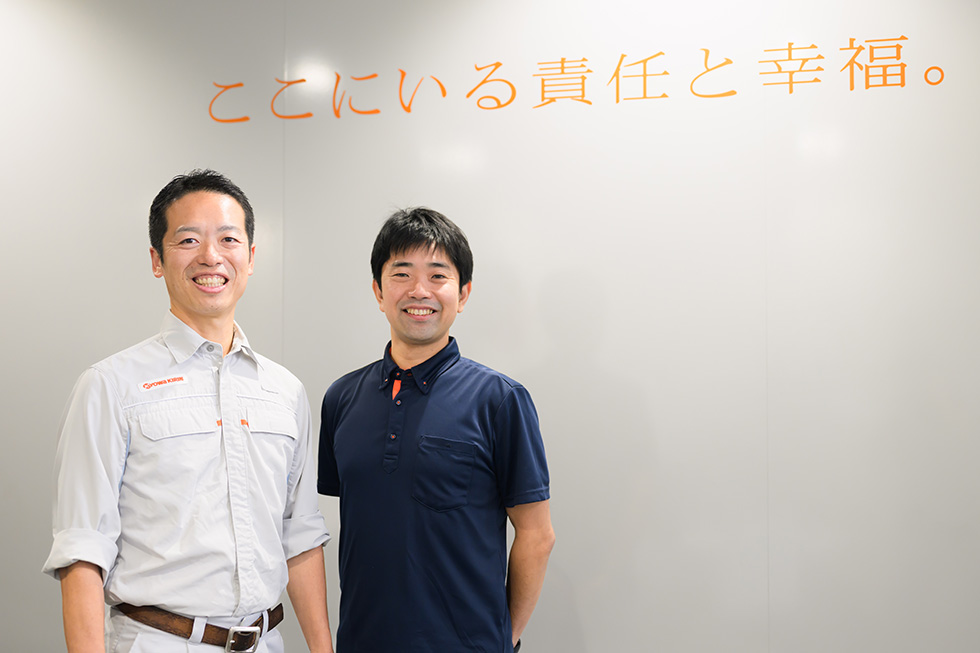
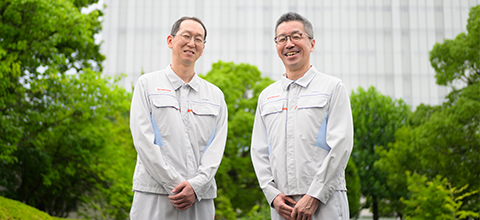
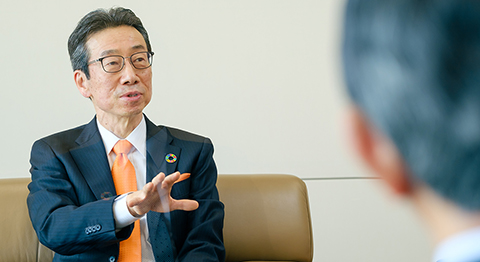
The Innovation Center featured here has a streamlined organizational structure. Under the leadership of Principal Investigators (PIs), who are experts in their respective fields, their teams collaborate flexibly across disciplines to advance research. In this article, we speak with two PIs about their research activities and how the establishment of the Innovation Center has transformed the research environment.
Profile
Katsuaki Usami, Ph. D.
Principal Investigator, Innovation Center, Research Division, Kyowa Kirin Co., Ltd.
Originally from Saitama Prefecture, he studied pharmaceutical sciences during his university years, focusing on elucidating the mechanisms of the Ebola virus infection. Motivated to develop antibody therapeutics, he joined Kyowa Kirin in 2009. He has worked on multiple antibody pipeline projects and subsequently transitioned to antibody technology research, which he continues to pursue today. In 2022, he studied biology at Monash University in Australia. He was appointed as a PI at the Innovation Center in January 2025.
Masahiro Esaki, Ph. D.
Principal Investigator, Innovation Center, Research Division, Kyowa Kirin Co., Ltd.
Originally from Kumamoto Prefecture, he conducted research on the regulation of ion metabolism using zebrafish, a model organism, during his university years. Inspired by the open and dynamic atmosphere of the research environment, he joined Kyowa Kirin in 2008. He has focused on hematologic malignancies, engaging in research on natural product–based drug discovery and small-molecule degraders. After advancing research from exploratory stages through clinical development, he was appointed as a PI at the Innovation Center in January 2025. In his research, he places particular importance on embracing challenges that spark excitement.
Flexible collaboration between disease teams and technology teams
─ Could you tell us about the research you are responsible for?
Masahiro Esaki (hereinafter Esaki) At the Innovation Center, we have teams dedicated to diseases and to technology. The disease-focused teams include Bone & Mineral, Hematological Diseases and Hemato oncology, and Rare Diseases. I’m on the team working on hemato oncology, which progress rapidly and are challenging to treat. We investigate how our technological capabilities can be leveraged to tackle these issues, with my team primarily focusing on developing new medicines using antibody technologies.
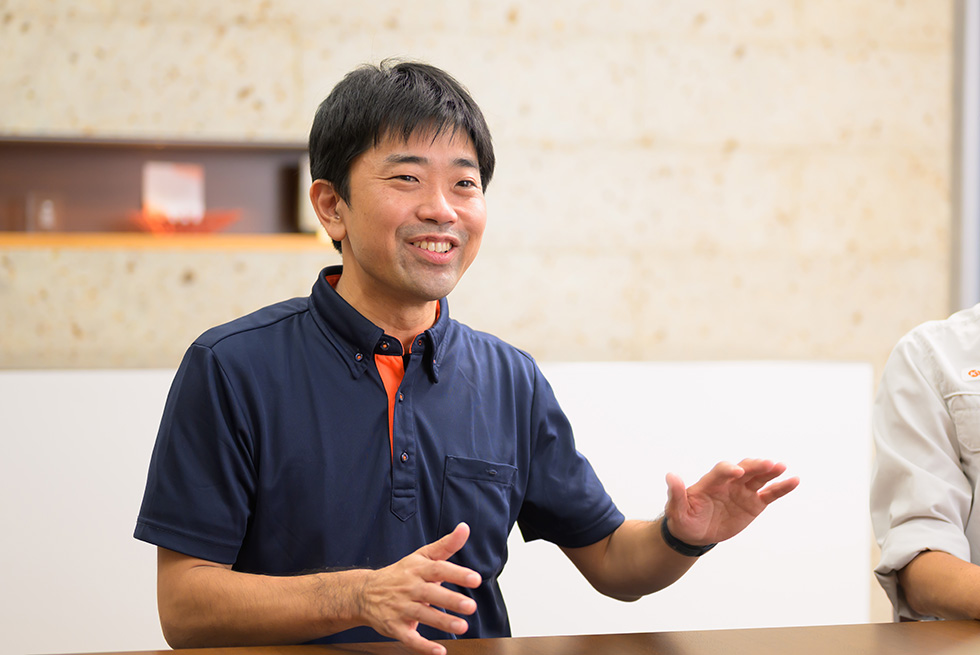
Katsuaki Usami (hereinafter Usami) The technology teams are organized by drug discovery modalities, including antibodies, gene therapies, and cell therapies. I’m responsible for the antibody technologies. Since the establishment of the Innovation Center, there has been a strong emphasis on collaboration between disease-focused and technology-focused teams. Occasionally, the disease teams ask us, “How should we approach targeting the molecules associated with this disease?” Conversely, team members working on antibody technologies might ask, “If we had this specific type of antibody technology, what disease-related needs could it address?”
Esaki Rather than working one-on-one, we move forward through interactions across multiple teams.
Usami That’s right. In the context of antibody technology, the molecules that antibodies bind to are known as antigens. Antibodies that bind to antigens closely associated with diseases have the potential to serve as the foundation for therapeutic drugs. For this reason, we ask, for example, to the hemato-oncology team, “Which molecules are specifically expressed in cancer cells?” If these molecules haven’t been identified yet, the hemato-oncology team collaborates with other teams to identify potential molecules for further investigation. Once a molecule is identified, they come back to us and ask, “Can we try to apply technology utilizing this molecule as an antigen?”
Creating new technologies from unconventional ideas
─ Have both of you built your careers primarily around early discovery research?
Usami When I first joined the company, I focused on research related to an antibody drug pipeline targeting cancer. In my fifth year, I shifted my attention to antibody technologies and had the opportunity to study abroad. After returning to Japan, I continued my work in early discovery, which I find particularly engaging.
For me, the process begins with visualizing the concepts as an animation in my mind. I imagine how the cells involved in the disease can be eliminated and then translate that vision into concrete technologies.
What I find most appealing is that even ideas that seem unrealistic by conventional standards can sometimes succeed in experiments. For instance, to enable antibody-dependent cellular cytotoxicity (ADCC), an important antibody function, to act specifically on pathogenic cells, I intentionally split the antibody in half an experiment while setting aside the stability that has traditionally been regarded as a defining feature of antibodies. Our company, Kyowa Kirin, has the POTELLIGENT® Technology, and this work essentially represents a next-generation version of that innovation.
In this way, ideas that may initially seem unrealistic can yield unexpected results when tested experimentally. Witnessing those results lead to drug discovery is incredibly rewarding.
Esaki I joined the company as a researcher focused on developing cancer treatments. My work has primarily centered on small-molecule drug discovery, spanning from early discovery through clinical development. I’m particularly passionate about early discovery, as identifying new phenomena and targets is both exciting and fun.
While my research has included solid tumors, I have increasingly concentrated on hematologic cancers. Since the establishment of the Innovation Center, I’ve been able to dedicate more time to early discovery.
In the realm of clinical development, there were instances when our work was dictated by strict deadlines due to clinical trial schedules. However, with the Bio-Pharmaceutical Center now overseeing clinical development, roles have become more clearly defined. This shift has created an environment that allows us to focus on early discovery.
An environment where research themes emerge through a bottom-up approach
─ Did the way research is conducted change with the establishment of the Innovation Center in January 2025?
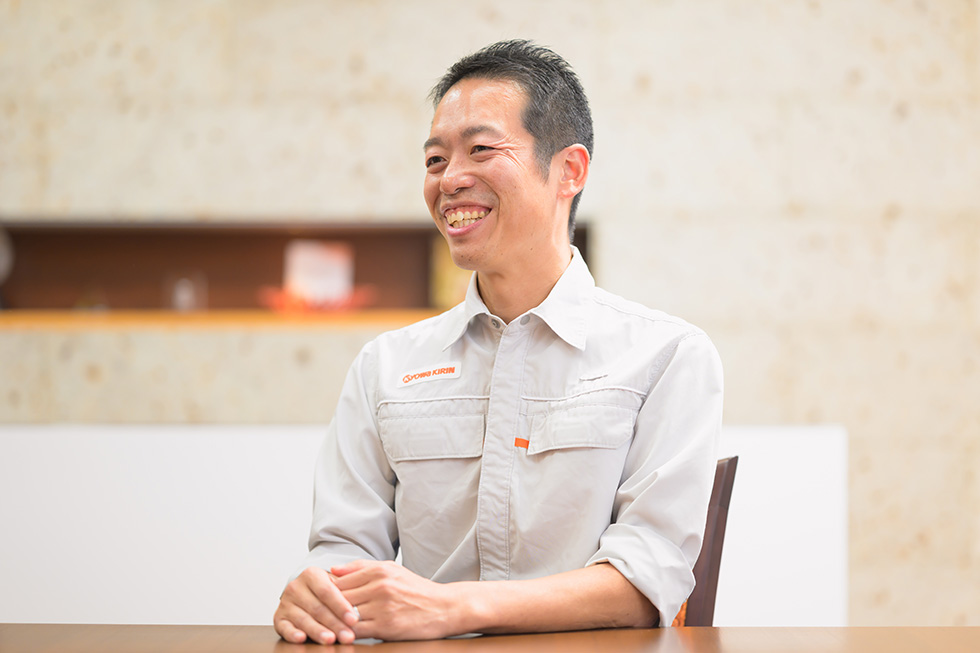
Esaki The disease and technology teams were based in separate research facilities before, but they’re now combined. Although teams are still organized by areas of expertise, discussions move forward much more quickly. My team includes chemists, biologists, antibody and peptide researchers, and pharmacology specialists, allowing us to pursue research from a wide range of perspectives.
Usami The process has certainly become smoother. Those of us on the technology side often pursue technological advancements quite deeply. However, when we presented new developments to the disease teams and asked for their feedback, we discovered that the level of sophistication we achieved wasn’t always necessary. When we consider only the perspective of antibody technology researchers, it can be unclear what is truly needed for a therapeutic drug. Now that the disease and technology teams are collaborating to develop research themes, it’s much easier to identify the level of technology that is genuinely required.
Esaki In that sense, it has become easier for us to express our needs. We often think, “If we could focus on core targets (molecules that play a significant role in diseases), we might achieve better treatments.” However, targeting these core molecules presents challenges, such as their low abundance, which can make achieving sufficient efficacy difficult, and their expression in normal tissues, raising concerns about potential side effects. Fortunately, since the technology teams are readily available, it’s now much simpler to consult with them about technologies that could help us overcome these challenges.
Usami Clearly defined challenges make it much easier to take action on the technology side. Active collaboration is a core concept of the Innovation Center, and I believe that intentional cooperation among the 11 PIs has led to promising research. Additionally, it’s not just the PIs; researchers are actively crossing team boundaries too, and collaborating in an open and engaging manner.
Esaki That’s true. Usami-san, your team’s average age is in the early thirties, right? Ours is about the same. Research themes often emerge through conversations among researchers, and that was already happening even before the Innovation Center was established.
Usami Over the years, I’ve initiated many research themes. Those of us currently in PI positions belong to a generation that has grown by developing our own research themes from an early stage and advancing them while encouraging collaboration. This is why we have high expectations for researchers to work together and adopt a bottom-up approach.
At the Innovation Center, we have created an environment that encourages proactive collaboration among researchers, promoting the generation of new ideas. In Part 2 of the article, we will explore mechanisms for fostering emergent creativity through researcher collaboration, team management, and the work environment.
Voices of the PIs
Here are the thoughts of the PIs leading research in the Bone & Mineral Diseases and Rare Diseases teams.
Akiko Sano, Ph. D., Bone & Mineral Team
I’m involved in early discovery research to develop new medicines for diseases of bone metabolism and skeletal abnormalities. Through its drug discovery initiatives and products, Kyowa Kirin has established strong connections with physicians, patients, and researchers in the bone and mineral field. It is a joy to pursue science alongside stakeholders across the world, all with the grand dream of changing patients’ futures. Achievements that seem unattainable alone become possible when we collaborate with colleagues who possess diverse expertise. I hope to continue advancing our research by taking an active interest in one another’s work and working together as a team.
Yasunori Uemura, Ph. D., Rare Diseases Team
I focus on drug discovery initiatives to address intractable rare diseases and immune-related disorders. At Kyowa Kirin, each researcher brings a high level of expertise, fostering an open and collegial atmosphere where we can provide one another with candid and constructive feedback. One appealing aspect of our work is the opportunity to develop pipeline projects through a bottom-up approach.
Throughout my career, I have been involved in numerous projects and encountered challenges in achieving reproducibility in research. During these times, my colleagues’ support has been invaluable. Strong connections among researchers, data, and other relationships ultimately lead to the development of outstanding medicines that can truly benefit patients. I will continue to strive each day to build meaningful, high-value connections and remain fully committed to advancing drug discovery.
More Kyowa Kirin "Innovation" Stories
Rare Disease Day 2025: Spreading Awareness and Support Holding Events Worldwide
Patients | August 29, 2025

Enhancing Patient-Centric Activities in Japan region’s Medical Affairs Department (MA Department): A Seminar with Guest Speakers, Including a Patient
Patients | August 19, 2025
Special Dialogue between the CEO & COO: Together, Pioneering New Horizons
Growth | July 24, 2025
“Healthcare Café” Report ─ A Platform for Patient Dialogue: Thinking About Hematopoietic Stem Cell Transplantation (Part One)
Patients | July 23, 2025
“Healthcare Café” Report ─ A Platform for Patient Dialogue: Thinking About Hematopoietic Stem Cell Transplantation (Part Two)
Patients | July 23, 2025
Special Discussion: Story for Vision 2030
Growth | June 23, 2025
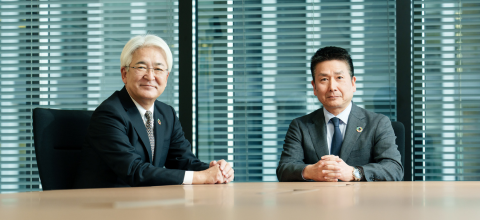
PRIDE MONTH Message from Abdul Mullick, President and COO
People & Culture | June 2, 2025
Listening to Patients’ Voice and Responding to Their Needs: Kyowa Kirin's Patient Engagement Activities
Patients | March,18, 2025
Kyowa Kirin CPO Itagaki’s message for International Women’s Day
People & Culture | March 7, 2025
What is the Kyowa Kirin Group’s health and productivity management initiative, Wellness Action 2025?
People & Culture | February 10, 2025
Rare Disease Day 2025 - More Than You Can Imagine
Patients | February,7, 2025

Kyowa Kirin CEO Miyamoto’s New Year Message: Accelerate Our Reforms with Determination for Delivering Life-changing Value to Patients
Growth | January 14, 2025
Kyowa Kirin Hosted Booth at Tokyo Rainbow Pride 2024 for a Second Year in a Row: Initiatives for Accelerating DE&I and the Ideal State a Company Should Strive to Be (Part One)
People & Culture | October 15, 2024
Kyowa Kirin Hosted Booth at Tokyo Rainbow Pride 2024 for a Second Year in a Row: Initiatives for Accelerating DE&I and the Ideal State a Company Should Strive to Be (Part Two)
People & Culture | October 15, 2024
Strengthening our training framework to tackle the biopharmaceutical engineer shortage
People & Culture | September 20, 2024
Highlighting Kyowa Kirin's initiatives across regions for PRIDE MONTH 2024
People & Culture | September 13, 2024

Bio Adventure: Kyowa Kirin’s works with local communities on project to foster future scientists
People & Culture | August 9, 2024
PRIDE MONTH Message from Jeremy Morgan, President, Kyowa Kirin International plc (EMEA region)
People & Culture | July 5, 2024
Kyowa Kirin launches the CTCL Global Care Collaborative’s Time to Act global consensus statement
Patients | May 13, 2024
Kyowa Kirin Global Corporate Planning Head Shoko Itagaki’s Message for International Women's Day
People & Culture | March 8, 2024

Kyowa Kirin CEO Miyamoto’s New Year Message
Growth | January 9, 2024
Kyowa Kirin Chief International Business Officer Abdul Mullick’s Message on UN’s International Day of Persons with Disabilities
Sustainability | December 1, 2023
Kyowa Kirin hosted a booth for the first time at the Tokyo Rainbow Pride 2023 [Our Diversity, Equity & Inclusion]
People & Culture | November 9, 2023
Our Stable Supply of High-quality Pharmaceuticals
Sustainability | September 20, 2023
Provide pharmaceuticals for unmet medical needs - A Conversation with Kyowa Kirin’s R&D Executives
Innovation | August 22, 2023
Ensure a Thriving Global Environment for Future Generations
Sustainability | July 28, 2023
“Menstruation” and “fertility treatment” felt like taboo subjects in the workplace - Why be open about issues unique to women? PartⅡ
People & Culture | June 9, 2023
“Menstruation” and “fertility treatment” felt like taboo subjects in the workplace - Why be open about issues unique to women? PartⅠ
People & Culture | April 25, 2023
Kyowa Kirin CEO Miyamoto’s Message on Rare Disease Day
Patients | February 28, 2023
Promoting patient advocacy and nurturing patient-centric care: Interview with Kyowa Kirin North America
Patients | February 14, 2023

Celebrating another year of diverse initiatives around the world: RDD 2022 in EMEA
Patients | January 24, 2023

Celebrating another year of diverse initiatives around the world: RDD 2022 in North America
Patients | December 15, 2022

Celebrating another year of diverse initiatives around the world: RDD 2022 in Asia Pacific
Patients | November 21, 2022
Celebrating another year of diverse initiatives around the world: RDD 2022 in Japan
Patients | October 20, 2022
Providing high-quality pharmaceuticals to patients around the world
Sustainability | September 22, 2022
Striving to create life-changing “Only-one value” that brings smiles to patients
Innovation | July 25, 2022
Kyowa Kirin International: It's Time to Shine A Light on XLH
Patients | June 27, 2022
Kyowa Kirin CEO Miyamoto’s Message on Pride Month
People & Culture | June 9, 2022
Kyowa Kirin International Celebrates the UN’s International Day of Persons with Disabilities in EMEA
People & Culture | January 20, 2022

Kyowa Kirin International: Around the world challenge
People & Culture | December 17, 2021

Kyowa Kirin North America: Honoring The Caregiver, Everyday Heroes, During National Family Caregivers Month
Patients | November 19, 2021

Kyowa Kirin's Effort to Realize a Sustainable Society
Sustainability | October 11, 2021

Our Financial Strategy for Creating Life-changing Value
Growth | September 9, 2021
Changes in society caused by COVID-19 and the impact on Kyowa Kirin
Growth | August 19, 2021
Bio Adventure Hands-On Experience Sessions: Become a drug discovery researcher During Your Summer Break
Sustainability | July 27, 2021
AMGEN AND KYOWA KIRIN TO JOINTLY DEVELOP AND COMMERCIALIZE KHK4083, A PHASE 3-READY, POTENTIAL FIRST-IN-CLASS TREATMENT FOR ATOPIC DERMATITIS
News Release | June 1, 2021
MEI Pharma and Kyowa Kirin Announce New Clinical Data on Zandelisib at American Society of Clinical Oncology Annual Meeting
News Release | May 20, 2021

White Paper on the unrecognized burden of XLH in adults in Europe
Patients | July 13, 2020

Empowering Children to Ask "Why?": Tohoku University Science Campus Hands-On Science Lessons (First Half)
People & Culture | March 5, 2020
Empowering Children to Ask "Why?": Tohoku University Science Campus Hands-On Science Lessons (Second Half)
People & Culture | March 5, 2020
“Delivering smiles with sports” Creating an inclusive society through table tennis
Sustainability | January 14, 2020
Bio Adventure*: Kyowa Kirin Invites Children to a Science Adventure
People & Culture | July 3, 2019